
The second production run is where a DTC product quietly changes. What causes the drift, and the three controls that catch it before the stock is paid for.
LINKORA SOURCE · FIELD GUIDE
Always compare to the fixed reference
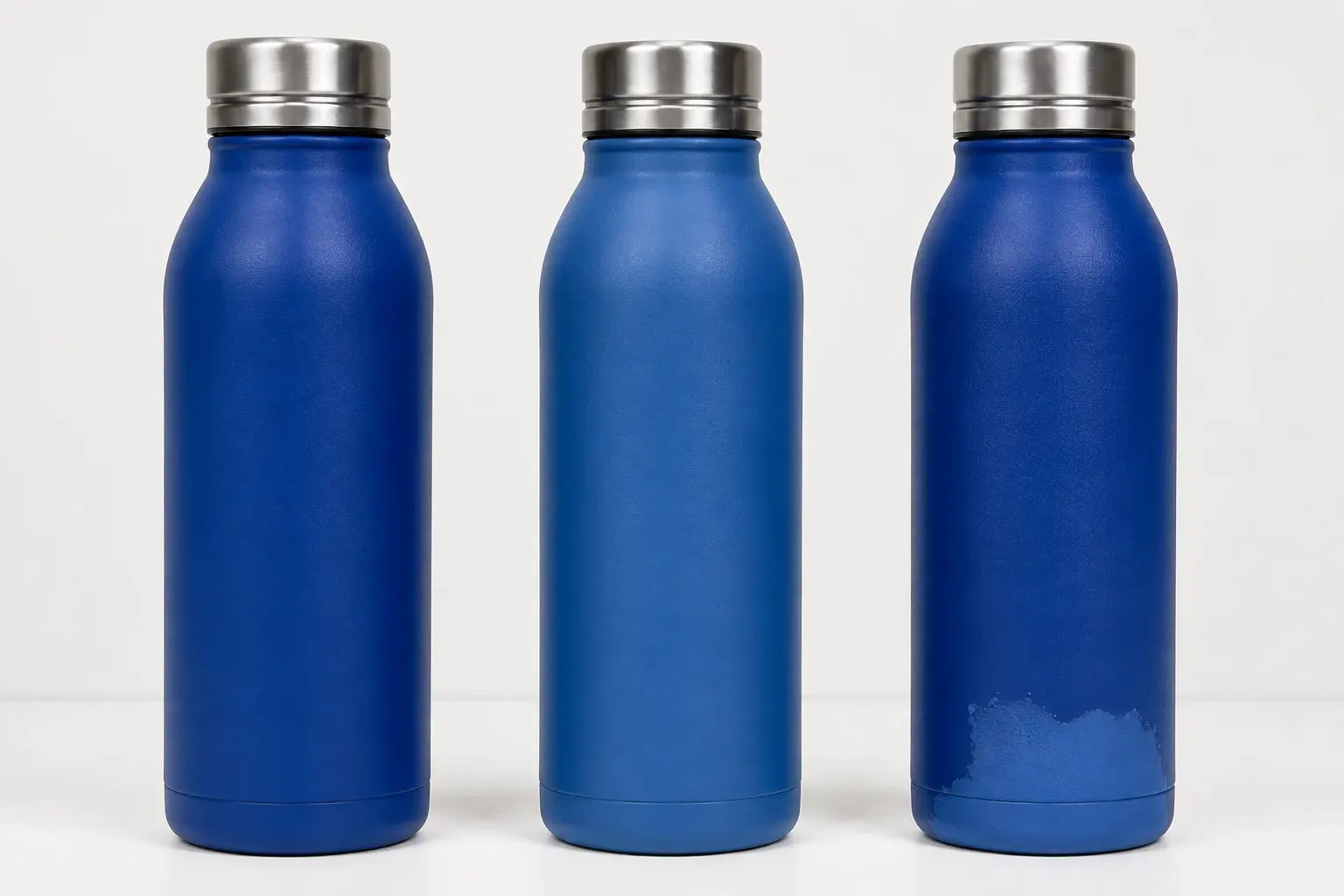
Approved reference
Left: retained product standard
Later batch
Centre: visible colour difference
Another batch
Right: visible coating difference
Why the second run drifts when the first was fine
The first order gets attention. It has samples, questions, a launch behind it and often the factory's better line. The second is a repeat of something already solved, so it is quoted more keenly, scheduled around larger orders, and made from whatever material is current rather than the specific lot someone chose. None of that is deception. It is the ordinary behaviour of a supplier who believes the product is settled, and it is why the drift shows up as a series of small equivalent-looking decisions rather than as a mistake. Nobody at the factory can point to the moment it changed, which is also why asking them what went wrong produces so little.
- Attention, not intent, is what differs between run one and run two
- Keener pricing on a repeat usually comes out of the inputs
- Small equivalent-looking substitutions accumulate into a noticeably different product
Control one: a reference that is not the last delivery
Comparing each batch with the one before it is how standards fall gradually — each step is acceptable, and the tenth is not. The alternative is a fixed physical reference: a sealed, dated, signed unit from the run you approved, held outside the factory, with a written specification saying which of its properties decide accept or reject. We hold the sealed sample and the specification and check each order against them, which is what makes the comparison stable over a year of reorders rather than only over one.
- A sealed reference unit from the approved run, held outside the factory
- A written specification naming the deciding properties
- Every order compared to the reference, never to the previous batch
Control two: a change list the supplier has agreed to
Most repeat-order failures follow a change the supplier did not think worth mentioning. Agree in writing which changes require notice and re-approval before production: material or grade, component supplier, colour lot, tooling repair or replacement, production site or line, and any subcontracted step. Send that list to the factory rather than filing it, because a rule the supplier has never seen is one they cannot follow, and a change notified late is still infinitely better than one discovered in a customer photograph.
- A short, specific list of changes requiring prior notice
- The list sent to the factory and acknowledged, not just filed internally
- Re-approval against the sealed reference, not against a photograph
Control three: inspect every repeat, at a level you chose deliberately
Coverage can be lighter on a line with a clean history, but the decision should be made in advance and written down rather than taken by whoever is under time pressure that week. Keep full coverage after any change on the list, after a long gap between orders, and on anything where a defect reaches the customer before it reaches you. For DTC that last category is wide, because there is no trade buyer in between to catch anything.
- Inspection level chosen in advance, per line, and recorded
- Full coverage after any notified change or a long production gap
- DTC has no intermediate buyer to intercept a bad run
What the customer sees, and what to check for it
The properties that generate returns for a DTC brand are rarely the ones on an engineering drawing. They are colour against the approved sample under normal light, surface finish, the fit and feel of a closure, print position and legibility, the smell of a material out of the bag, and whether the box survives the carrier. Name two or three of these per product as line items on the inspection checklist. A generic visual check finds generic problems; the specific ones are what customers photograph.
- Colour, finish, feel, print and packaging condition named explicitly
- Checks written as line items, not left to a general visual pass
- Review the named checks after every batch of customer complaints
Authoritative references
Need this applied to your sourcing brief?
Tell us the product, market and decision you need to make. We will confirm whether a scoped sourcing, verification or quality service is suitable.
Start a sourcing brief