
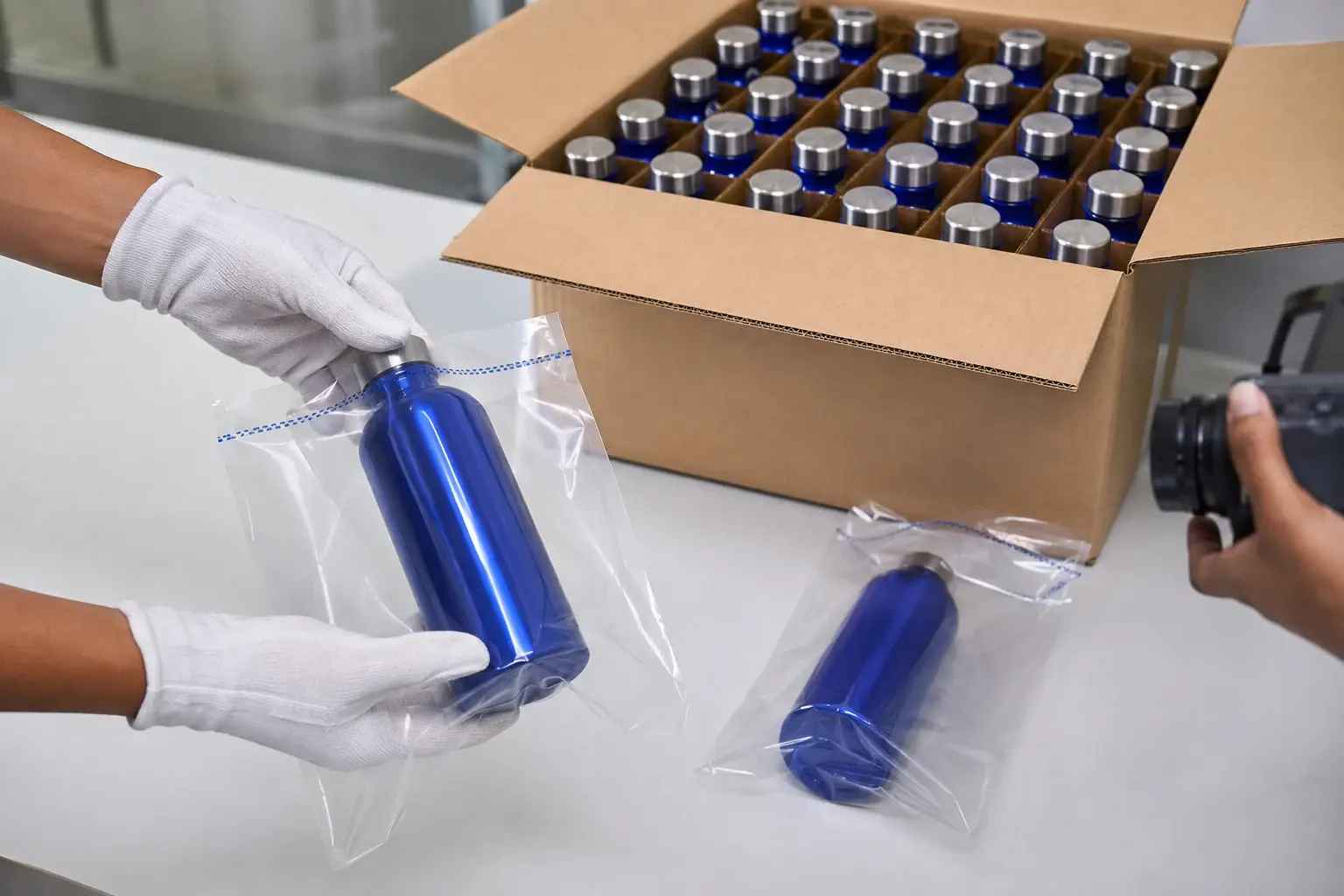
How samples for laboratory testing are drawn, sealed, labelled and handed over so the result belongs to the batch — and why you commission the lab yourself.
LINKORA SOURCE · FIELD GUIDE
Keep the sample tied to the lot
Draw
Randomly across packed production
Identify
Lot · sample · date · attendees
Seal
Seal and photograph the sample
Handover
Custodian · carrier · laboratory
Why the sample's origin decides the result's value
A test certificate is evidence about the units tested. Everything that lets you extend it to a shipment sits outside the laboratory: which batch the units came from, whether they were selected at random or chosen, whether they were production units or hand-made specimens, and whether the sealed package the laboratory opened is the one that left the factory floor. A certificate handed over by a supplier with no sampling record attached tells you only that a conforming object existed at some point. It does not tell you what is in your cartons.
- The certificate covers the units tested, nothing wider
- Random selection from the actual batch is what extends it
- Golden or hand-finished specimens do not represent production
How the draw itself should work
Samples are drawn from finished, packed production, at random across the lot rather than from one pallet, in the quantity the laboratory has specified for the tests being run — including any retained duplicates. The selection is recorded: batch identifier, quantity produced, quantity drawn, the method of randomisation, the date and who was present. Sampling for inspection is a related but separate exercise governed by acceptance sampling standards; the point common to both is that the sample is drawn by someone with no interest in the outcome.
- Drawn at random across the lot, from packed production
- Quantity set by the laboratory, including retained duplicates
- Batch, quantities, method, date and attendees recorded
Sealing, labelling and the chain of custody
Once drawn, samples are sealed so that tampering is visible, labelled with the batch identifier and the sample number, and photographed sealed. The handover is documented: who took custody, when, by which carrier, and to which laboratory. Retained duplicates stay sealed with the buyer or with us, so that a disputed result can be checked against a second sample from the same draw rather than against a new production run. This part is unglamorous and it is the part that gets skipped. If a dispute ever turns on whether the tested units came from the shipment in question, the seal photographs and the handover record are the entire answer.
- Tamper-evident seals, batch and sample numbers, photographs
- Documented handover: custodian, date, carrier and destination
- Retained duplicates kept sealed for a possible re-test
Commission the laboratory yourself
The laboratory should be engaged by you, directly, with the report issued to you. A test arranged and paid for by the supplier has the wrong reporting line, whatever the laboratory's competence, because the party with an interest in the outcome controls the instructions and sees the result first. Choose a laboratory accredited for the tests you need — the general requirements for the competence of testing laboratories are set out in ISO/IEC 17025 — and give it the standard, the market and the intended use, since the same product tests differently against different national requirements.
- Engagement and report both in the buyer's name
- Accreditation checked for the specific tests, not in general
- Standard, destination market and intended use stated in the instruction
What we do, and what we do not
We can attend, draw the sample at random, seal and label it, document the chain of custody, photograph the process and hand the sealed package to the carrier or laboratory. We are not a testing laboratory and do not carry out chemical, mechanical or safety testing, and we do not issue certificates or reports under any certification scheme. Nor do we interpret a laboratory result as compliance for your market — the laboratory reports against the standard it was instructed to use, and the conclusion for your market is drawn by you or by your compliance adviser, who knows what else applies to that product in that country.
- We witness, draw, seal, document and hand over
- No testing, no certificates, no scheme reports from us
- Compliance conclusions are the buyer's, based on the lab's report
Authoritative references
Need this applied to your sourcing brief?
Tell us the product, market and decision you need to make. We will confirm whether a scoped sourcing, verification or quality service is suitable.
Start a sourcing brief