
Retail brands · Updated 20 August 2026
China sourcing for retail brands
A retail brand is judged on what it can show about a supplier, not only on what it bought from one. Your category manager is asking two things at once: can this factory make our product, and will the file we build about it survive an internal review, a retailer's compliance team and, if the product is ever questioned, a claim. The second question is the one that fails late.
Start a sourcing brief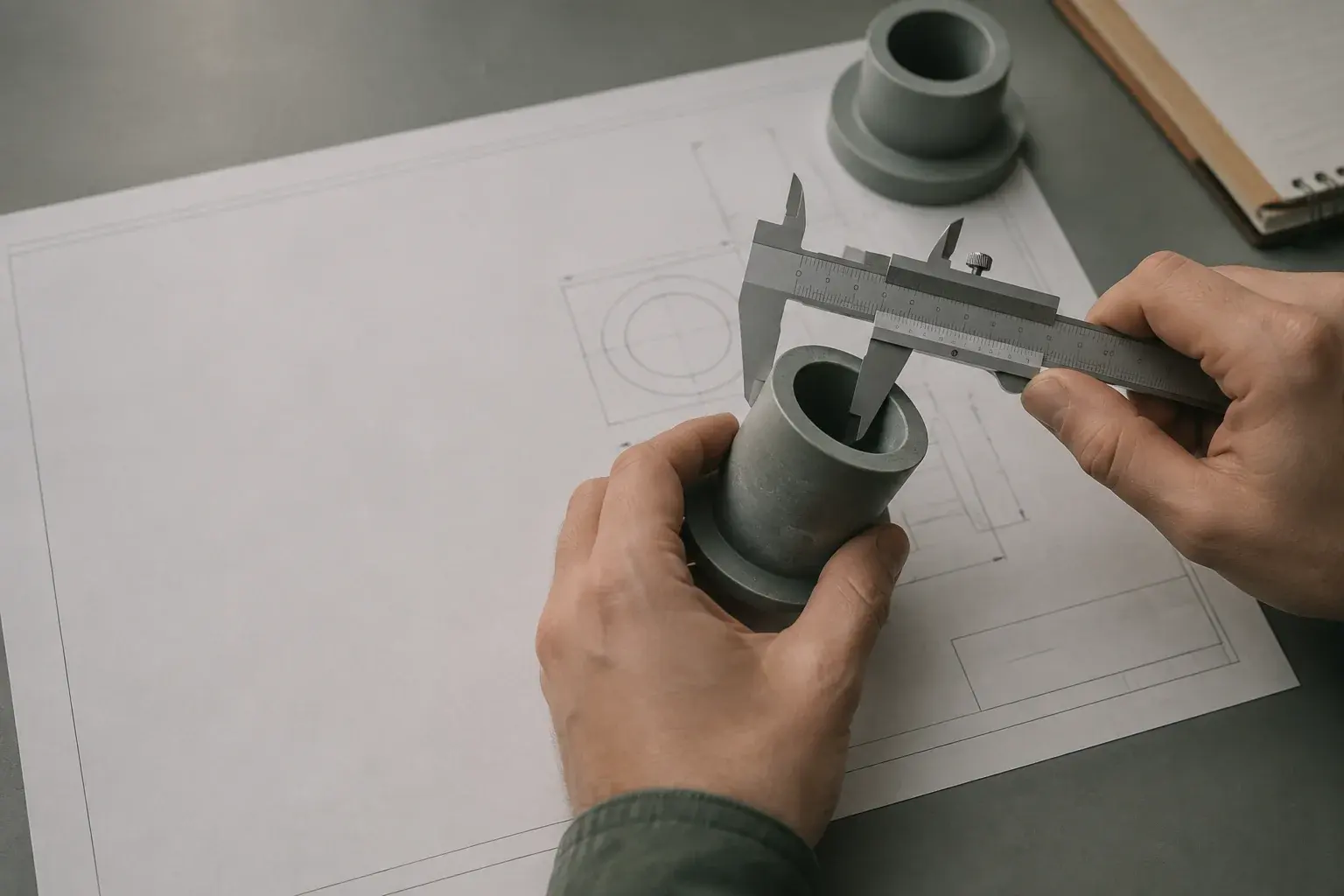
This is written for you if
- You sell into physical retail — chains, department stores or your own store estate — and a supplier must clear an internal onboarding process before any order is placed
- The product is one you have already specified: a catalogue line, an adaptation of one, or a repeat range — bespoke development, tooling spend and design gates are covered on the OEM/ODM page instead
- Your compliance or technical team needs documented evidence about the supplier, not a recommendation
- You are onboarding a new supplier, or re-verifying an existing one after a change of site, ownership or volume
- Several people have to sign off, and the decision has to be defensible months after it was made
You probably do not need us if
- Your retailer requires a social-compliance or ethical-trade report issued under a named scheme — BSCI, Sedex SMETA, or another your customer names. Labour and site conditions are observed and written up inside a factory audit here, but no report is issued under any of those schemes, and an audit report from this work is not a substitute for one; a scheme report has to be booked with an auditor that scheme has approved
- You need a laboratory test report or a certification mark issued under formal accreditation, or your retailer's standard requires the report to come from a provider on its own approved list — those have to come from the accredited bodies concerned, and sourcing and inspection work does not stand in for them
- You already run your own compliance and QA team in China and want day-to-day capacity under your own management, rather than separately scoped checks carried out by a third party
- You need documentation produced for a decision already taken, or for goods that have already shipped — findings are dated to the day the work was done and are not written backwards to fit a conclusion
What actually goes wrong
01
The supplier has to pass your process, not just make your product
Vendor onboarding asks a Chinese factory for things that are no part of taking an order: a completed supplier questionnaire in English, a named quality contact, a documented change-control route, evidence of who owns the site. A factory that makes the product correctly can still stall on the forms, and the order stalls with it. The cause is not always resistance — the person holding the file may not be able to tell which of their documents answers the question being asked. It is a translation problem before it is a compliance problem: the question has to be put in Chinese, to the person who actually holds the record.
02
Evidence has to survive being read by someone who was not there
A file usually fails for a reason that has nothing to do with how well it was written: the picture was never assembled. Full visibility of a supply chain is rare, and most brands can describe their supplier and very little behind it, so when a reviewer asks where a component came from or which site actually made a batch, there is nothing to produce. What survives a cold reading is a record built to be read cold — each finding dated, sourced, located, and explicit about what was not checked. A summary saying the factory was satisfactory answers nobody a year later, and whether a record turns out to be usable is settled when the checklist is written, before the visit.
03
The factory you assessed and the factory making your goods have to be the same factory
An audit finding describes one site on one date. It stops describing your production the moment a line is subcontracted out at peak, a second site opens under the same licence, finishing or packing moves to a workshop that appears on no document, or the company holding the contract turns out not to be the company running the floor. None of that has to be concealed to go unrecorded; it only has to go unasked. So the site is treated as a question in its own right — which address, which lines, whose staff, and where the order is scheduled to run when the season is busy. Where part of production sits elsewhere, it is written down as a finding with the site named, because an assessment that does not say which place it describes cannot be relied on for the place your goods came from. The same limit applies to anything observed about working conditions: it is a statement about the site that was visited, not about a subcontractor nobody named.
04
Liability sits with the brand, and traceability is what answers for it
When a product is questioned in your market, the retailer comes to you rather than to your supplier. Answering means knowing which batch, made on which line, from which components, on what date — and being able to show it rather than assert it. Batch and component records are the supplier's to keep, so what they record, and how long they keep it, is worth agreeing in writing while onboarding is still open. A traceability gap is straightforward to close while a supplier is being onboarded and very hard to close once a claim is open.
05
Replacing a supplier is not the slow part. Your own process is
Finding another factory that can make the product is rarely what holds up a switch. The delay is your side: the vendor file has to be rebuilt, the assessment repeated, the documents reissued, and whoever signed off the first supplier has to sign off the second. That sequence has a length, and it does not compress because a season is approaching. A replacement identified in the quiet part of the year can be through your process before you need it; one identified in the week the deliveries stop cannot.
What stays with you
The approval decision itself. Someone else can go and look, ask, and write down what was found, but putting a supplier onto your vendor list is an act your business answers for, and evidence gathered by a third party does not move that answerability anywhere.
- The decision to approve, reject or conditionally accept a supplier
- Your compliance standard, and what your retailers require of you
- The product specification, and the range it belongs to
- Responsibility for the product you place on your market
- The relationship with your retail customers
What moves to us
The China-side work of turning a supplier into a file your process can act on: going to the site, asking in Chinese, reading records, and writing down both what was confirmed and what was not.
- Confirming the legal entity, its ownership and what it is licensed to do
- Establishing whether the site that was assessed is the site that will produce
- Putting your onboarding questionnaire and specification to the supplier in Chinese, and returning documented answers
- Auditing capability, quality control, record keeping, and the labour and site conditions seen on the day, against an agreed checklist
- Inspecting production against your approved sample, and recording plainly what could not be confirmed
- Drawing and sealing samples for your laboratory under witness, with the draw photographed and the chain of custody recorded — the laboratory is contracted by you, not by us
What the engagement covers
Before onboarding starts
Supplier verification
Establish the company that would go onto your vendor master: registered Chinese name, unified social credit code, registration status, approved business scope, and whether the name on the quotation, the contract, the invoice and the receiving bank account all describe that same company. Where they do not, it is reported as a finding with the documents attached, because a vendor record that is wrong at creation stays wrong through every order raised against it.
View serviceBefore the supplier is approved
Factory audit
Assess the production site against an agreed checklist: capability for your product and volume, quality control, record keeping, whether any part of production is subcontracted elsewhere, and the labour and site conditions observed on the day. Findings are dated and attributed to the site visited. No report is issued under BSCI, Sedex SMETA or any other named scheme.
View serviceFrom approval to first production
China sourcing
Put your specification, packaging and labelling requirements to the supplier in Chinese and record what they have accepted, so the approved sample enters your file as a dated record with a named source and photographs, rather than as an agreement that lives in a chat thread nobody outside it can read.
View serviceBefore each shipment
Quality inspection
Sample-based inspection against the approved sample and the agreed checklist, covering packaging, labelling and carton marking, with photographs and measurements attached to each finding and a plain statement of the sampling plan used. Where your market requires laboratory testing, units can be drawn from the run under witness during the same visit, sealed and sent to the laboratory you have appointed, with the draw recorded so the report can be tied back to the batch it describes.
View service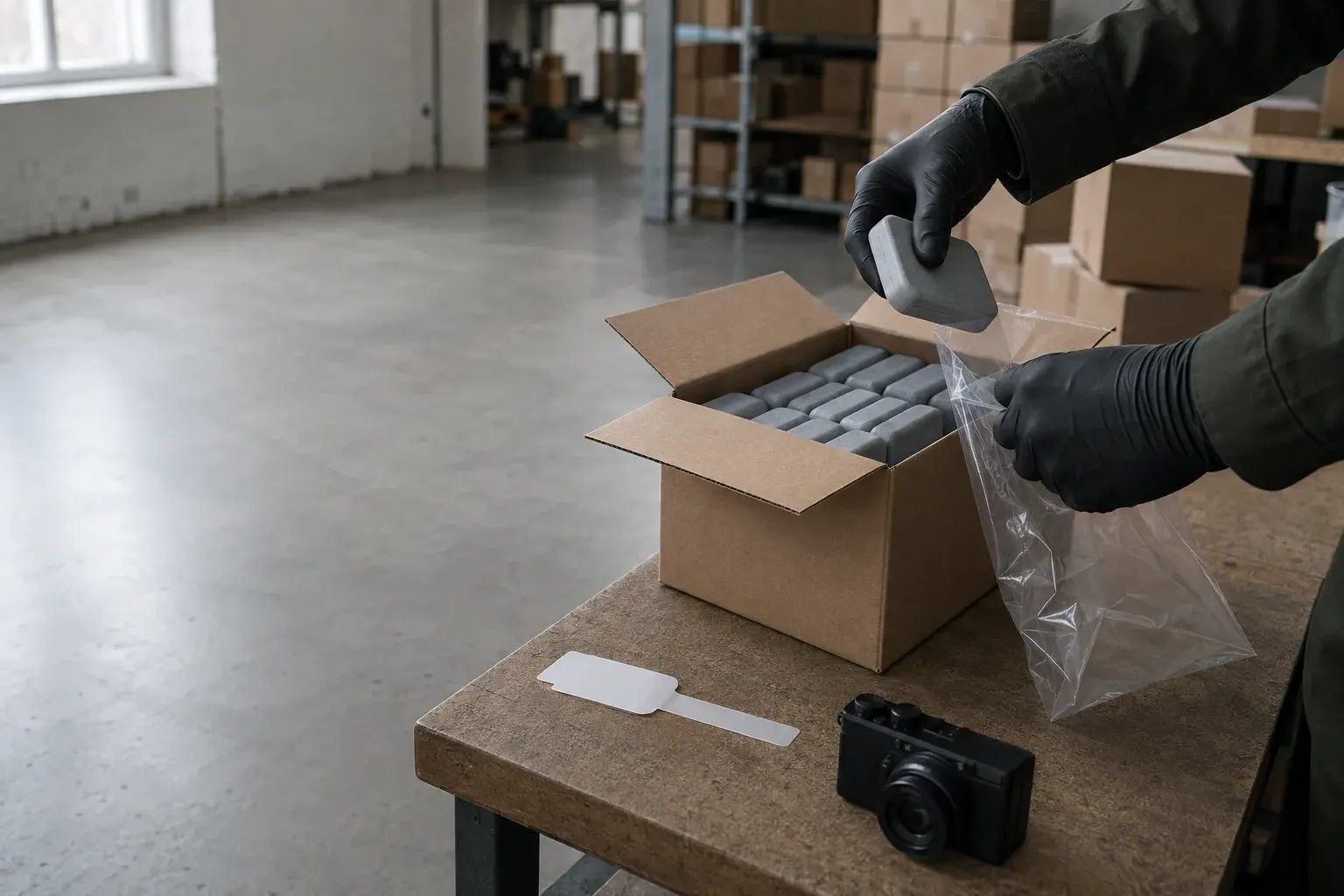
The questions your compliance team would ask, answered before you commit
A retail vendor questionnaire goes out to every candidate and comes back in as many formats as there are candidates, none of it checkable from your desk. We collect the same set before you commit, in one comparable form, and separate what we confirmed from what remains the supplier's claim. A vendor file that blurs those two is the file that fails when somebody finally reads it.
MOQ per SKU and per colourway
A range quoted as one minimum usually hides several: colours, sizes and packaging formats each carry their own.
What we bring back: Minimums quoted in writing per variant, with the parts that can move identified separately.
Lead time, and what starts the clock
Deposit received, artwork approved and materials in house are three different starting points, and only one of them is usually meant.
What we bring back: The start point named, and the quoted duration compared against what a similar order actually took.
Material and component sources, and the substitution rule
Whether the mill or component supplier is fixed for your product, or picked per order on price. The second answer means an approved material can change without anyone calling it a change.
What we bring back: Sources named, and the fixed-or-not answer treated as real only once it is written into the specification.
Certificates and test reports
What a certificate covers decides whether it means anything for your product: the issuing body, the scope and the expiry matter more than its existence.
What we bring back: The document, its issuer, scope and expiry, reported as they are. We do not issue reports under any certification or social-compliance scheme's name.
QA process, and which records reach your file
What is checked, at which stage, by whom, and whether the record ever leaves the factory.
What we bring back: What they actually do, observed on site. Headline pass-rate figures are recorded as the supplier's claim, because there is no way to verify them.
Traceability: how a batch would be identified later
The question nobody asks at onboarding and everybody asks after a complaint. What identifies a batch, and which records are kept for how long.
What we bring back: Batch definition and retention confirmed, and the marking checked on the goods at inspection rather than taken on trust.
What they have already produced in your category
Not a catalogue of what they could make, but evidence of your product type running on their line.
What we bring back: Production of your category seen on site. Claims about named retailers or brands are reported unconfirmed, because checking them needs that customer's permission rather than ours.
Questions buyers ask first
Can you provide evidence in a form our compliance team can put on file?
Yes, provided the requirements are agreed before the work starts. A file that stands up on later reading records four things: what was checked, on what date, at which named site, and what was not checked. Findings are supported by photographs, measurements and copies of the records seen, and each is attributed to its source rather than merged into a summary. Where something could not be confirmed, it is written down as an open point rather than left out. Sending your onboarding template or audit form in advance means the report can be built to that structure, with your line items answered directly, instead of being translated into it afterwards.
How do you confirm that the factory we approved is the factory that actually makes our goods?
The production site is treated as a separate question from the registered company. A business licence identifies a legal entity and an address; it does not confirm where the work happens. A site visit establishes whether the lines, equipment and staffing match the product and volume being discussed, and the site's own production and scheduling records show where an order of your description would be run. Documents that tie the entity to the address — the lease, the licence address, the records kept on site — are looked at together rather than one at a time. Undisclosed subcontracting is recorded as an audit finding with the other site named where it can be established. Re-checking is warranted when volume rises sharply, when the supplier changes site or ownership, or ahead of a peak season.
Our retailer asks for a social-compliance audit. Can you carry one out?
Not as a scheme report, and it is worth being exact about the difference. Labour and site conditions are observed as part of a factory audit — what the site is like, and how the people working there are treated on the day of the visit — and they are written up as dated findings alongside the capability and quality-control findings, in the same file. What is not issued is a report under BSCI, Sedex SMETA or any other named scheme; those are issued by auditors the scheme itself has approved, and a report from this work does not substitute for one. If your retailer's standard names a scheme, book that audit with an approved auditor and treat this work as the separate question of whether the site holding the scheme report is the site making your goods.
Our product category has testing and documentation requirements in our market. How is that handled?
Those requirements are treated as part of the specification rather than as something raised at inspection. In practice you or your compliance advisers state which requirements apply to the product and destination market, and that list is turned into checkable items: which documents the supplier must produce and hold, and what the goods and their markings have to show. At inspection the goods and markings are checked against what those documents describe, and any mismatch is recorded. Requirements change, so the list is confirmed as current at the time rather than reused from an earlier project. Testing itself belongs with an accredited laboratory, and the laboratory is contracted by you directly rather than through us — that keeps the test report in your name and your relationship with the lab unmediated. What is done on this side is the step in front of it: samples can be drawn from the production run under witness, photographed, sealed and labelled with the date, the line and the batch they came from, and dispatched to the laboratory you nominate, with the chain of custody recorded. That matters because a test report is only evidence about the goods you are shipping if the units tested provably came out of the run — a sample handed over by the factory with no record of where it came from proves considerably less than the certificate suggests. Beyond that, the sourcing work is making sure the right samples, records and markings exist for the testing to mean anything.
Our approval process takes months and involves several people. Does that change how the work is scoped?
A long, multi-person approval changes the sequencing of the work more than its content. The checks that can disqualify a supplier outright — legal entity, ownership and where production actually happens — are worth completing before anyone invests time in sampling and negotiation, because a committee that receives evidence out of order can reopen the early questions late, after the commercial work has already been done. Findings are written for a reader who was not on the call. Every finding is dated, so a reviewer months later can see how old it is and decide whether it needs refreshing before the order is placed.
If that is not quite you
Buyers of different kinds fail in different ways. These pages cover the neighbouring cases.
Tell us what you are sourcing
Describe the product, the market and the decision you need to make. We will confirm whether a scoped service is suitable and what it would cover.
Start a sourcing briefKeep researching
Guide
How to vet a wholesale supplier for a retail store
OpenGuide
Retail vendor onboarding checklist for China suppliers
OpenGuide
Product traceability records for retail suppliers
OpenGuide
Witnessed sampling for independent laboratory tests
OpenComparison
Factory audit vs product inspection
OpenGuide