linkorasource

Tooling checklist

Settle the tooling agreement before you fund the tool.

A mould is usually the largest payment a buyer makes before a sellable unit exists, and it buys an object that stays in someone else's factory. These are the points worth settling in writing first.

Download checklist
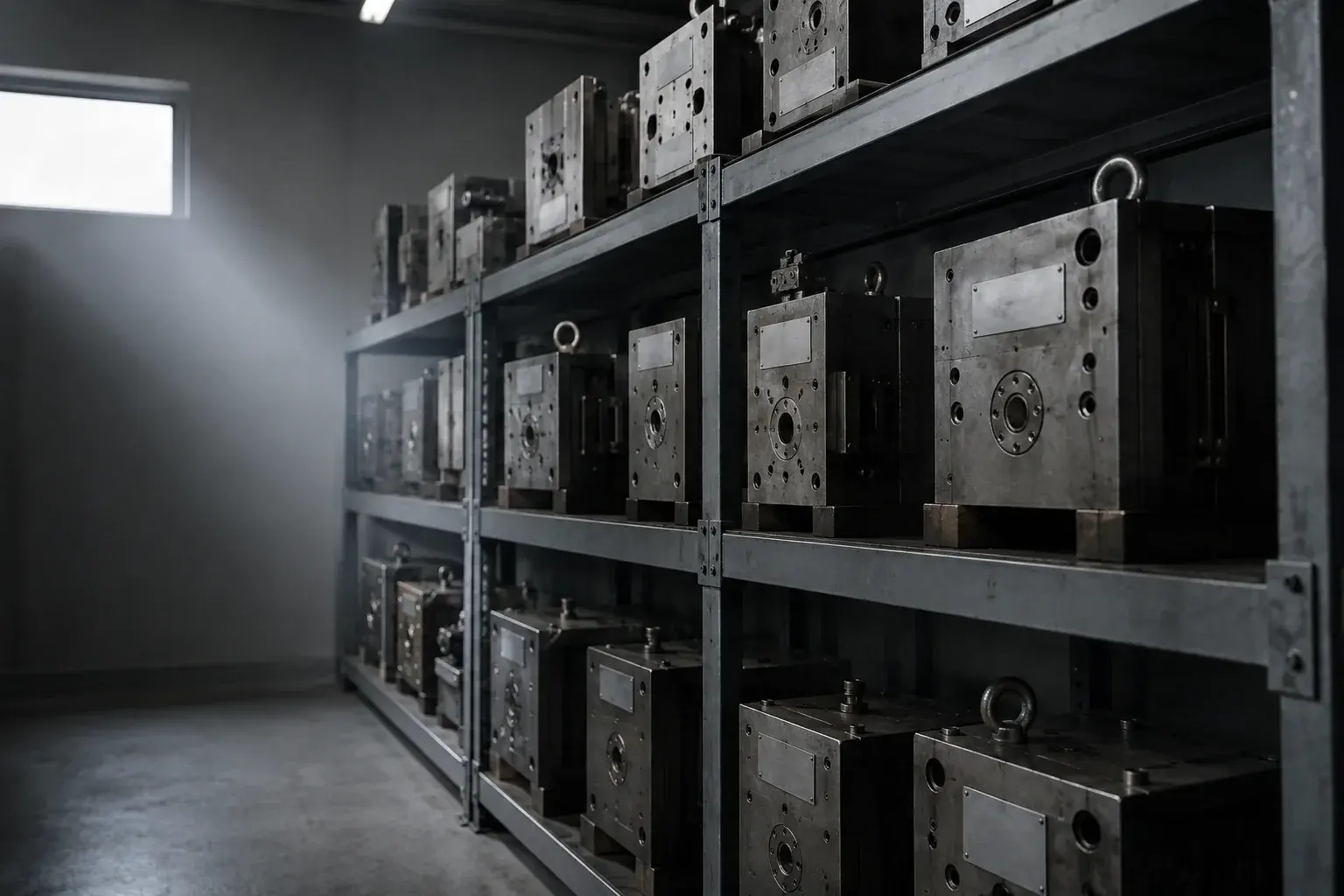
Rows of steel moulds stored on industrial shelves with blank metal plates

This is a checklist, not a contract and not legal advice. It lists what an agreement should cover so that the commercial questions are answered before a lawyer drafts. It does not contain wording, and it does not tell you what your agreement means. Have the agreement drafted or reviewed by a qualified lawyer in the relevant jurisdiction before you pay anything.

01

What is being paid for

A tooling invoice is often a single number for something that is really several things. Naming them is what makes the rest of the agreement possible.

  • Each tool identified individually: part name, drawing number and revision, cavity count
  • What the price covers — design, steel, machining, trials, texturing, first-article samples
  • How many trial and modification rounds are included, and the cost of a further one
  • Whether the amount is a full cost or an amortised contribution recovered through unit price — and if amortised, over how many units, what happens if that volume is never reached, and whether the unit price drops once it is
  • Payment stages tied to verifiable events — design sign-off, steel cut, first trial shot, sample approval — rather than to calendar dates

02

Ownership

Paying for a tool and owning it are not the same thing, and the gap between them is where most tooling disputes live.

  • Who owns the tool once it is paid for, stated in plain words
  • When ownership passes: on final payment, on sample approval, or on delivery
  • Whether the tool is marked with your name or an asset number, and who applies the marking
  • Whether the supplier acknowledges holding the tool for you rather than owning it
  • Whether the supplier may pledge the tool, use it as security, or let a third party hold it
  • What happens if the supplier is wound up, sold, or its site is repossessed

03

Where the tool is, and who may use it

A tool is a physical object at an address. An agreement that never names the address leaves the most checkable fact unrecorded.

  • The named site where the tool will be kept and run
  • Whether the tool may be moved, and what notice you get
  • Whether production using the tool may be subcontracted, and whether you must approve that
  • An explicit prohibition on running the tool for anyone else, including for the supplier's own account
  • Whether you may inspect the tool on site, and on what notice

04

Intellectual property

The steel and the design are separate pieces of property, and an agreement that transfers one does not necessarily settle the other.

  • Who owns the product design, the drawings and the 3D data, separately from who owns the steel
  • Who owns any design change the supplier contributes during development
  • What the supplier may do with the design after the relationship ends
  • Confidentiality covering drawings, data and samples, and how long it lasts

05

Maintenance, life and repair

Tools wear out. Who pays for that, and who owns what replaces it, is easier to agree before the first shot than after the hundred-thousandth.

  • Expected tool life, expressed in shots or units
  • Who maintains the tool, at whose cost, and on what schedule
  • Who pays for wear, and who pays for damage — they are different questions
  • Who owns a replacement insert or a repaired component
  • Whether maintenance records are kept, and whether you may see them
  • Whether the tool is insured, by whom, and for what value

06

Getting the tool back

This is the clause that matters on the worst day of the relationship, and the one most often left out on the best.

  • The notice required to request release of the tool
  • What must be settled before release — and whether release can be withheld against a disputed invoice
  • Who pays for removal, crating and transport
  • The condition the tool must be in when released, and whether it is run and sampled before it leaves
  • What is handed over with the steel: drawings, 3D data, process parameters, maintenance history
  • A time limit for release, so a request cannot be answered indefinitely with delay

07

Governing law and disputes

A remedy you cannot enforce against this supplier, in this place, is not a remedy.

  • Which law governs the agreement, and where a dispute would be heard
  • Whether a judgment or award obtained there could actually be enforced against this supplier
  • Whether the agreement exists in Chinese as well as English, and which version prevails
  • Whether the entity signing is the entity that will hold the tool — check the name against the business licence, not the letterhead

What can be checked on the ground.

Contract wording is a lawyer's work. What can be established by going to the site is factual: whether the tool exists, whether it is marked as yours, its cavity count and condition, and whether it is at the address the agreement names. Those checks are worth running before a tooling payment is released, and again before a tool is expected back.